

Wired vs Wireless CCTV Cameras: Which Is Better?
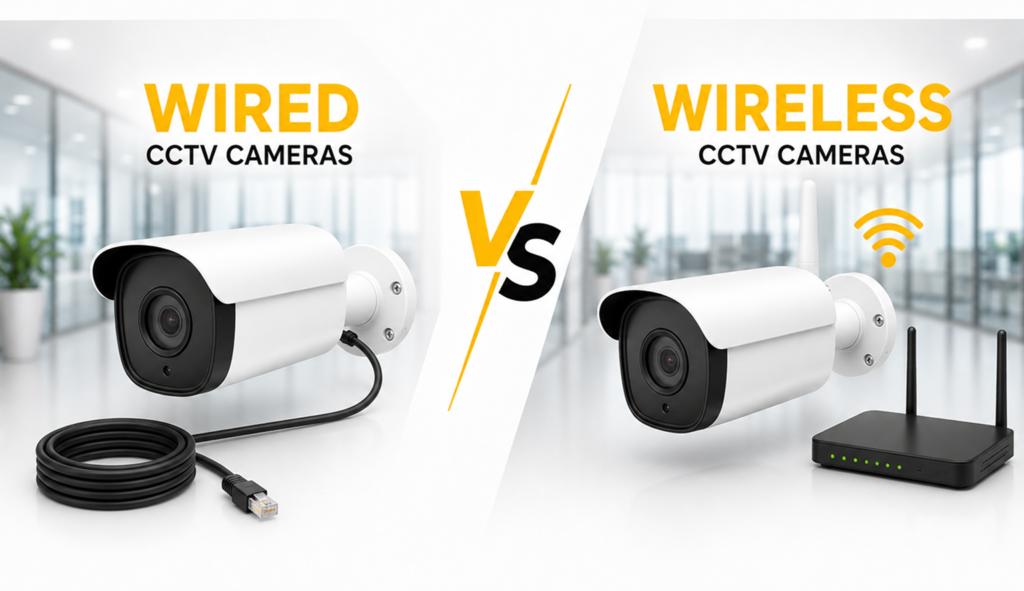
Choosing between wired and wireless CCTV cameras isn’t about finding which one is universally “better”—it’s about matching the right system to your specific property, budget, and appetite for installation hassle.
Both systems have distinct engineering philosophies, and the right choice for a rental apartment is vastly different from the right choice for a large, multi-story property.
The Core Difference at a Glance
| Feature | Wired CCTV (PoE / Coaxial) | Wireless CCTV (Wi-Fi / Battery) |
| Data Transmission | Physical cables (Ethernet or Coax) | Wi-Fi frequencies (2.4 GHz / 5 GHz) |
| Power Source | Constant (Power over Ethernet or DC adapter) | Plug-in outlet, rechargeable battery, or solar |
| Installation | Labor-intensive (Drilling, conduit, cable routing) | DIY-friendly (Mount and pair in minutes) |
| Signal Reliability | 100% stable; completely immune to RF interference | Subject to Wi-Fi drops, range limits, and congestion |
| Continuous Recording | Perfect for 24/7 continuous local recording | Typically limited to motion-triggered clips to save battery/bandwidth |
| Storage Style | Local NVR/DVR (No monthly fees, Terabytes of storage) | MicroSD card or Cloud Subscriptions (Monthly fees) |
| Security/Hacking | Extremely secure; physical access required to tamper | Vulnerable to Wi-Fi jamming and remote hacking if poorly secured |
Deep Dive: Wired CCTV Systems
Modern wired systems typically use PoE (Power over Ethernet). A single network cable runs from a central Network Video Recorder (NVR) to each camera, supplying both power and high-speed data.
The Pros
Unmatched Reliability: No lag, no buffering, and no dropped connections. Because the data travels through physical copper, it is completely unaffected by thick concrete walls or dense radio frequency (RF) traffic.
Constant 24/7 Monitoring: There are no batteries to charge, and you aren’t trying to conserve network bandwidth. You can record non-stop high-bitrate 4K video to massive hard drives.
Immunity to Jamming: Cheap, illegal Wi-Fi jammers can easily blind wireless cameras. Wired cameras are completely immune to this vulnerability.
Zero Ongoing Fees: All of your video files are stored locally on your NVR. You don’t need a monthly subscription to review your historical archives.
The Cons
Painful Setup: Unless your building is already pre-wired with Cat6 ethernet, installing wired cameras involves drilling holes through walls, crawling through attics/crawlspaces, and routing cables cleanly. Most people need to hire a professional.
Zero Flexibility: Once a wired camera is mounted and the cable is run, moving it even a few feet can mean hours of tedious re-wiring.
Deep Dive: Wireless CCTV Systems
Wireless systems transmit video over your local Wi-Fi network. They are divided into two categories: Plug-in Wireless (requires a nearby power outlet) and Wire-Free (100% cable-free, running on rechargeable batteries or solar panels).
The Pros
Ultimate Convenience & Portability: You can install a wireless camera in under 15 minutes. Since you don’t have to drill heavy holes or run permanent lines, they are highly portable and perfect for renters.
Highly Scalable: Want to add another camera to your system? Just buy one, mount it within range of your router, sync it to your app, and you’re good to go.
Built-in Smart Integrations: Almost all consumer wireless cameras are built to integrate natively with smart home ecosystems like Google Home, Alexa, and dedicated smartphone apps for immediate remote notifications.
The Cons
Bandwidth & Signal Bottlenecks: Every wireless camera on your network continuously uploads data. If you have 4 or 5 high-definition wireless cameras continuously streaming, they can severely congest your home Wi-Fi, slowing down your video calls, gaming, and streaming.
Battery Maintenance: If you choose a wire-free (battery) model, you have to physically pull the cameras down every 2 to 6 months to recharge them—which gets highly tedious if they are mounted high out of reach.
The “Cloud Subscription” Trap: While initial hardware costs are cheap, many wireless brands lock advanced AI detection (human vs. pet classification) and historical video playback behind expensive monthly cloud subscriptions.
Which One is Right for You?
Choose a Wired System if:
You are a homeowner or business owner looking for a permanent, long-term security solution (10+ year lifespan).
You require reliable 24/7 continuous recording instead of just short, motion-triggered clips.
You are installing a larger system consisting of 4 or more cameras (which would choke a standard Wi-Fi router).
You want maximum protection against hacking and wireless jamming.
Choose a Wireless System if:
You live in a rental property, apartment, or temporary space where drilling structural holes is prohibited.
You want a straightforward, cost-effective DIY setup without paying for professional installation labor.
You only need 1 to 3 cameras to cover basic entry points.
You prioritize convenience, mobile app alerts, and easy integration with your existing smart home system.