

Night Vision CCTV Cameras: Everything You Need to Know
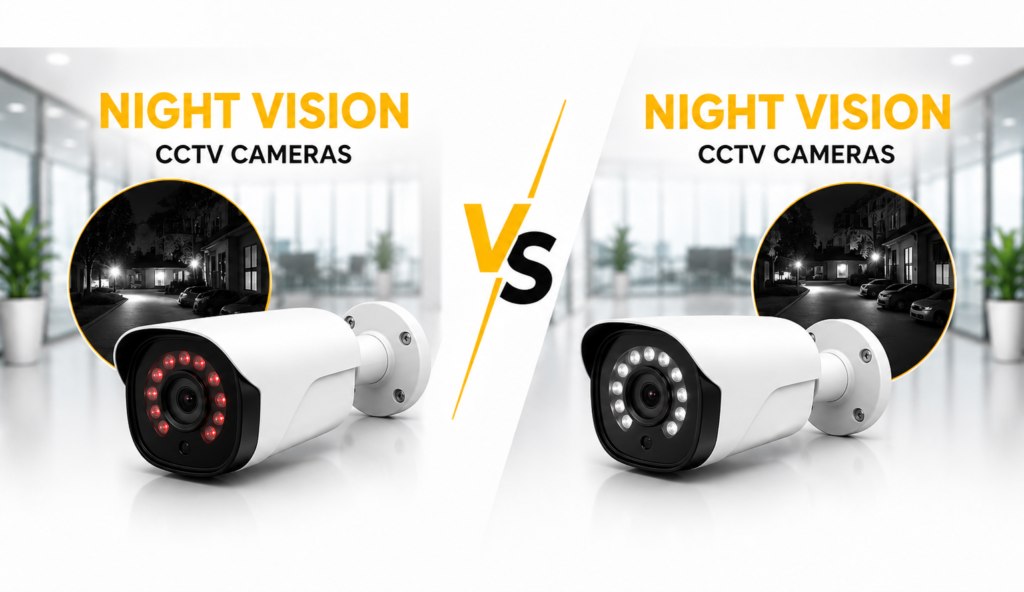
More than 70% of property crimes happen under the cover of darkness. That makes night vision the single most important feature of any security camera system.
If your cameras cannot capture clear, identifiable footage in pitch-black conditions, your security shield is practically useless for half of every day. Here is a practical breakdown of how night vision works, the different technologies available, and how to choose the right setup for your needs.
How CCTV Night Vision Works
Modern security cameras use one of two primary methods to see in the dark: Infrared (IR) illumination or Color Night Vision (Low-Light Sensors).
1. Traditional Infrared (IR) Night Vision
Most standard security cameras feature a ring of small LED bulbs surrounding the lens. When the sun goes down, a built-in light sensor triggers these LEDs to emit Infrared light.
While infrared light is completely invisible to the human eye, the camera’s image sensor is highly sensitive to it. The camera floods the area with this invisible light, bouncing it off objects and back into the lens to create a highly detailed, black-and-white image.
2. Color Night Vision (Low-Light Technology)
Rather than projecting invisible light, color night vision relies on incredibly advanced image sensors (like Hikvision’s ColorVu or Dahua’s Full-color) paired with wider apertures
These sensors are mathematically optimized to collect and amplify even the tiniest amount of ambient light—from streetlights, stars, or a sliver of moonlight—to produce vibrant, full-color images in near-total darkness. If the environment is truly pitch-black (0.0 lux), these cameras will usually turn on a very dim, warm physical white light to illuminate the scene gently.
Infrared vs. Color Night Vision: The Showdown
To choose the right technology, you need to weigh the trade-offs of each system.
Traditional Infrared (IR)
Pros: Works in absolute, 100% pitch-black conditions with zero ambient light. It is highly discreet because the light is invisible (aside from a faint red glow on the camera faceplate).
Cons: The footage is strictly black and white. If an intruder flees the scene, you won’t be able to tell the police the color of their jacket, hair, or getaway vehicle.
Best For: Unlit alleys, indoor warehouses, bedrooms, or areas where you do not want visible light pollution disturbing neighbors.
Color Night Vision
Pros: Captures critical color details (clothing, car paint, license plate colors). The visible warm white light also acts as an active physical deterrent to intruders.
Cons: Requires at least a tiny amount of ambient light to perform best. The visible white spotlight can make the camera highly obvious, which some users find visually unappealing on their homes.
Best For: Front driveways, retail storefronts, backyards, and streets with some surrounding ambient light.
3 Key Specs to Check Before You Buy
When shopping for a night vision camera, don’t just trust the marketing photos on the box. Look directly at the technical spec sheet for these three values:
1. The Lux Rating
Lux is the unit used to measure light intensity. A lower lux rating means the camera can see in darker environments.
0.0 Lux: The camera can see in absolute, total darkness (usually utilizing built-in IR LEDs).
0.001 to 0.01 Lux: Exceptional low-light performance capable of rendering color night vision with minimal ambient light.
2. Infrared Range (Distance)
Check the manufacturer’s rated IR distance. For residential setups, look for a range of at least 100 feet (30 meters). Keep in mind that real-world range is usually about 20% lower than the advertised lab-tested maximum.
3. Smart IR Technology
Ensure the camera specifications list Smart IR. Older or cheaper night vision cameras will “white-out” an object or face if it gets too close to the lens because the IR LEDs are blasting at full power. Smart IR automatically dims the infrared LEDs as an object approaches, keeping facial features perfectly clear and recognizable.
Troubleshooting Night Vision Issues
The “Foggy Halo” Effect: If your night view looks like a giant, blurry white circle, your camera is suffering from IR bounce-back. This happens when the invisible IR light reflects off a nearby wall, gutter, or dusty dome cover directly back into the lens. Adjust the camera angle away from close obstacles to fix it.
The Pink Image Bug: If your camera’s daytime feed suddenly looks bright pink or purple, the mechanical IR-Cut Filter inside the lens is stuck. Tapping the side of the camera housing gently can sometimes free the mechanical slider and restore normal colors.